
A Business Continuity Management System is the management system an organisation uses to establish, run, review and improve its continuity capability.
Business continuity management is how an organisation keeps its critical activities running through disruption. A Business Continuity Management System (BCMS) is the management system that makes that repeatable: the policies, roles, processes and reviews through which the organisation establishes its continuity capability, runs it, checks it and improves it.
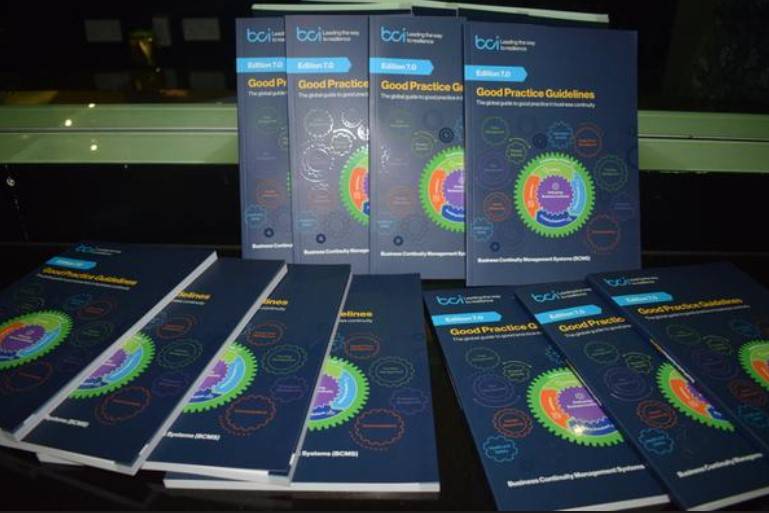
The BCI Good Practice Guidelines (GPG 7.0) centre on a BCMS, and ISO 22301:2019 sets out the requirements for one. ADOX develop consulting and training solutions in adherence to ISO 22301, UAE NCEMA 7000 and the BCI Good Practice Guidelines.
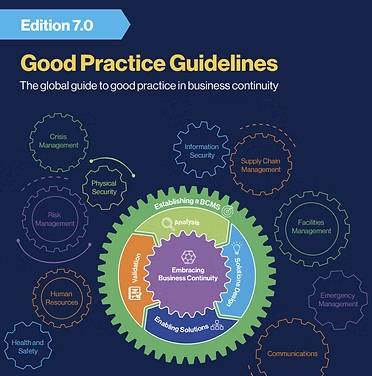
What the organisation will protect, and to what standard.
Who owns continuity, who decides, and how it is directed.
The analysis, design and validation work that shapes the capability.
Plans, people and tools put in place to make it real.
Measurement and review that keep the system honest and current.
GPG 7.0 organises the work of the BCMS into six Professional Practices, two management and four technical.
ISO 22301:2019 follows the Plan-Do-Check-Act cycle.
Set the scope, policy and objectives of the system.
Put the processes and controls in place and run them.
Measure performance and review what the results say.
Correct and improve, then feed the lessons back in.
A written mandate from the top, with clear ownership and accountability.
Continuity that connects to the organisation’s wider risk work, not a separate silo.
People, budgets and tools committed to building and keeping the capability.
Defined measures, reviewed on a schedule, that show whether the system works.
Design and implementation of business continuity and crisis management frameworks.
BC programme framework review, and peer review, auditing and benchmarking.
Risk and threat assessments with business impact analysis (BIA).
BC exercises and crisis simulations, awareness training and e-learning.
BC implementation reporting dashboards to monitor preparedness levels.
Integrated BIA, BC planning and incident response software automation.
Work is aligned with ISO 22301, UAE NCEMA 7000 and the BCI Good Practice Guidelines (GPG 7.0). For certification training, see the CBCI 7.0 Certification Course. To see how developed a programme is, see the BCM Maturity Model.
We aim to reply to your enquiry within 2 hours.